A new NBA season brings new possibilities—and, for me, memories of the players who first made me love the game.
Before I wrote about sports or worked in sports media, I was a kid with a basketball on Manhattan’s Upper West Side. The Knicks were my team. Bill Bradley was my favorite player.
So when I read about Bradley and Earl Monroe coming together again at the October 15 opening of the Earl Monroe New Renaissance Basketball School’s permanent home in the South Bronx, it brought back memories of Madison Square Garden—and a summer when running became much more than a way to get in shape for basketball.
The school introduces students to careers connected to basketball, including broadcasting, journalism, law and marketing. Having built a career around sports, I appreciate what that mission could mean for a young basketball fan.
My own connection to Bradley began long before I thought about a career in sports.
My dad took me to my first Knicks game at the old Madison Square Garden on December 9, 1967. It happened to be Bradley’s first professional game—and my dad’s birthday.
Bradley scored just eight points that night, but the reception he received from the Garden crowd was unforgettable.
A few years later, No. 24 became more than someone I watched from the stands.
For one memorable summer, he became my running buddy—at least that’s how I liked to think of it.
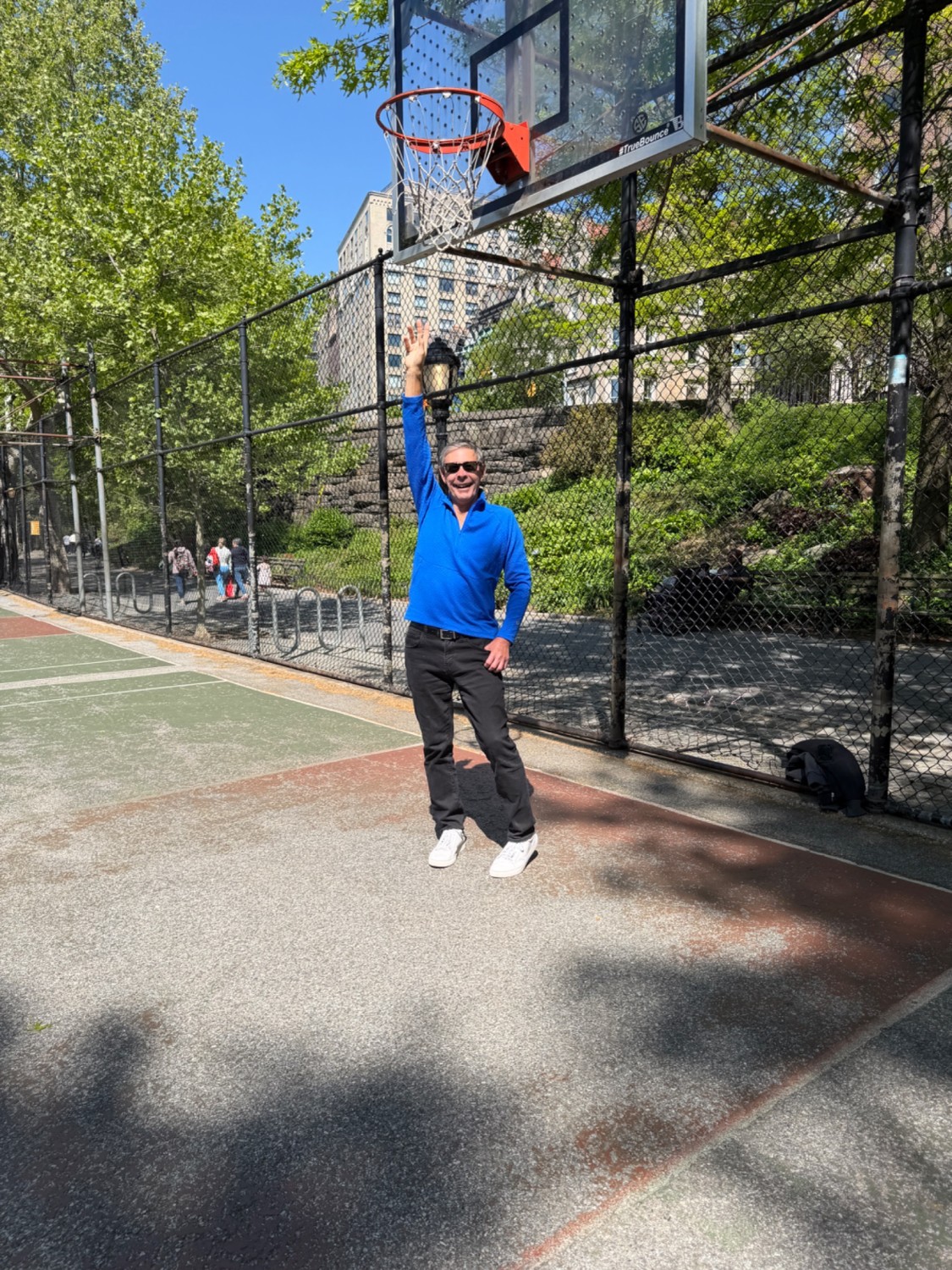
It was an early August morning, and I was practicing jump shots and spin moves at the playground on 73rd Street and Riverside Drive, my home away from home. Suddenly, I spotted someone jogging past the fence.
I couldn’t believe my eyes.
It was Bill Bradley.
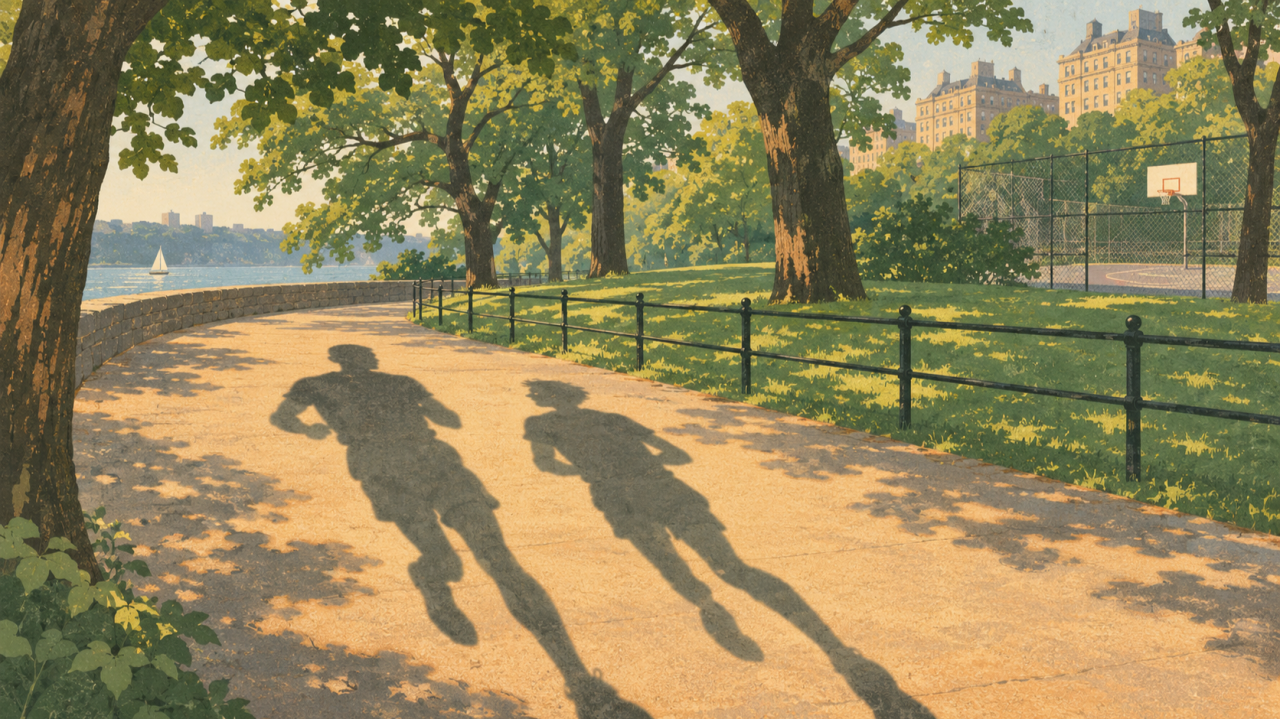
Wearing sweatpants and a T-shirt, he was running along Riverside Drive as casually as if he were just another guy out for his morning exercise.
I dropped my basketball and took off after him.
Catching Bradley wasn’t easy. One of his strides seemed to equal two or three of mine. But eventually I caught up, introduced myself and told him what a big fan I was.
He was polite, friendly and very much focused on his workout. He explained that he was getting in shape for the upcoming season and planned to run in Riverside Park in the mornings.
That was all I needed to hear.
For the rest of August, I suddenly developed a remarkable enthusiasm for early-morning running.
Several mornings a week, I’d head to Riverside Park, hoping to spot Bradley. When I did, I’d fall into stride alongside him—or at least try to. Occasionally, he’d exchange a few words with me as we ran.
Naturally, I couldn’t keep this extraordinary experience to myself. Before long, several of my friends were joining me. A group of teenage basketball fans who would normally have preferred shooting jump shots suddenly discovered the joys of running.
Or, more accurately, the joys of running with Bill Bradley.
I don’t know whether Bradley remembers those mornings.
I certainly do.
Those Knicks teams in the late 1960s and early 1970s also gave us plenty to remember. Bradley’s movement without the ball. Willis Reed’s strength and determination. Dave DeBusschere’s toughness. Walt Frazier’s extraordinary defense and ability to take control of a game.
And then there was Earl “The Pearl” Monroe.
Before he became a Knick, Monroe was someone I dreaded seeing with the ball. Those Knicks-Bullets games and playoff series were tense, memorable affairs, and there were nights when Monroe seemed to have an answer even for Frazier’s defense.
His spins, fakes and improvised shots could leave a Knicks fan shaking his head.
Then, in November 1971, he became our problem—in the best possible way.
Could Monroe and Frazier share a backcourt? Two stars, accustomed to having the ball, who had spent years trying to beat each other?
Watching them become championship partners was one of the pleasures of following that team. The player I had rooted against became someone I couldn’t wait to watch.
Years after trying to keep pace with Bradley on Riverside Drive and following him at Madison Square Garden, I had the opportunity to ask him about those Knicks as a journalist.
In our interview in July 1987, I asked what had made those Knicks teams so special.
“I think it was a very, one might even say, unique blend of talent and personality,” he told me. “Our talents meshed as players and our personalities meshed at the same time. Everybody had their job, their role—kind of on and off the court.”
That was what we had watched. Different players, different personalities, finding ways to make one another better.
Bradley’s description of his own priorities was equally direct.
“My primary interest was to have the team win a championship,” he said.
I also asked whether the feeling of Reed picking him up in the air after the Knicks won their second championship was something he would never forget.
“Absolutely. Absolutely,” he said, agreeing that such a high was difficult to duplicate.
Then he offered a wonderfully brief estimate of how long the feeling lasted.
“Maybe 48 hours. That’s it.”
For those of us who watched them, the memories have lasted considerably longer.
Now Monroe’s name is on a school helping young people discover how many places a love of basketball can take them. Bradley was there to celebrate with him, teammates again in a different setting.
I hope those students find something of what I found growing up with those Knicks: excitement, inspiration and possibilities I couldn’t yet imagine.
That summer, I was just a young Knicks fan trying to keep up with his favorite player.
Bradley was getting ready for another season. He gave me a memory for a lifetime.