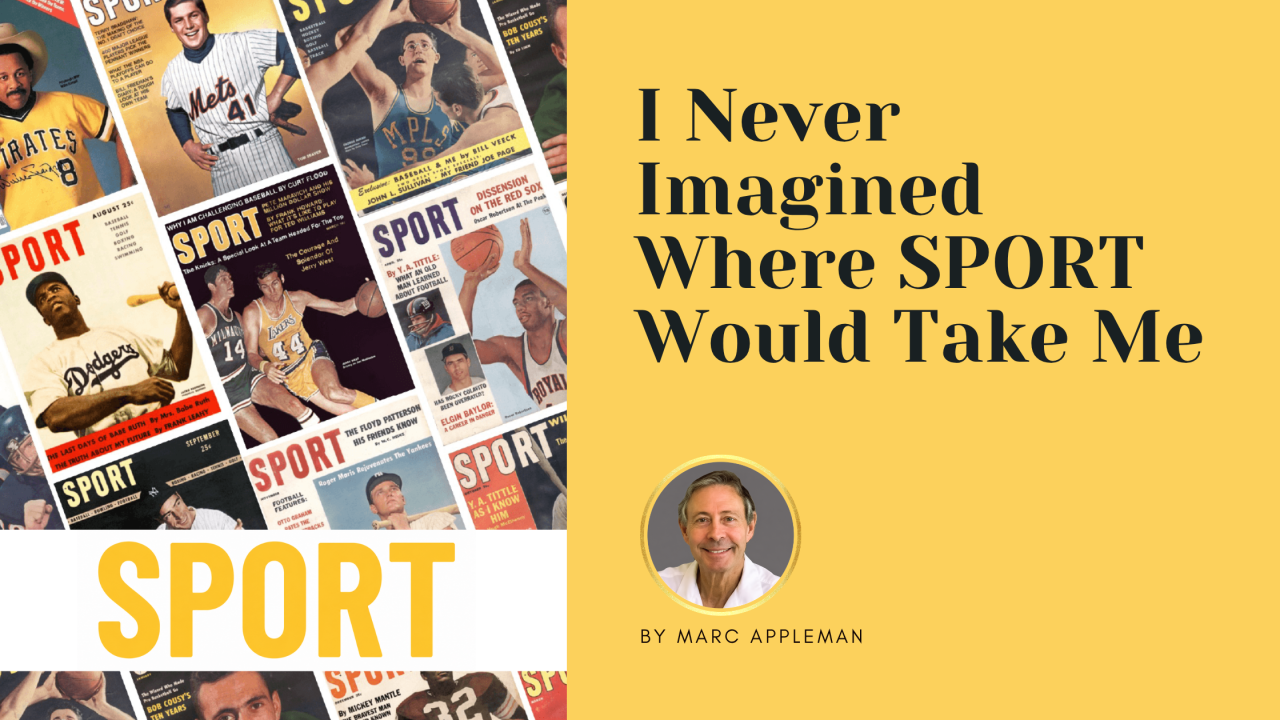
As a kid growing up in New York, there were few days more exciting than the day SPORT magazine arrived in our mailbox.
I'd flip through every page, read nearly every article and spend hours studying the spectacular photography. When I found a favorite photo of Mickey Mantle, Willis Reed, Joe Namath, or another sports hero, it usually ended up taped to my bedroom wall.
Like millions of young sports fans, I couldn't have imagined that years later I'd not only become a sportswriter, but eventually work alongside some of the writers and photographers whose work I admired so much as a kid.
SPORT wasn't simply another sports magazine. It told stories.
Long before sports became dominated by statistics, analytics and debate shows, SPORT focused on personalities. It introduced readers to the people behind the athletes—their challenges, dreams, families and motivations. The photography was equally groundbreaking. From its first issue in September 1946, SPORT pioneered the use of stunning full-color photography that captivated generations of fans and helped redefine sports journalism.
Without realizing it at the time, those stories influenced the way I eventually approached my own career.
When I covered sports for the Los Angeles Times and later worked at ESPN and throughout the sports media world, I always found myself gravitating toward the human side of the story. I enjoyed writing about athletes, coaches, executives and owners as people first. Wins and losses mattered, but I believed readers connected most with the personalities behind the headlines.
That philosophy began with countless afternoons spent reading SPORT.
One of the unexpected joys of my career was eventually getting to know some of the legendary writers and photographers whose work filled those pages. These were people whose bylines I had followed as a teenager. Suddenly they became colleagues, mentors and friends.
Life has a funny way of coming full circle.
Five years ago, another unexpected opportunity appeared.
A longtime friend, Wayne Parrish , who owns the SPORT archive, started discussing ways to bring this iconic brand back to life. What began as an idea has evolved into an incredibly interesting experience working together over the past five years to explore what SPORT could become in a very different media landscape. It wasn't about simply recreating the magazine exactly as it once was. Instead, we believed SPORT's extraordinary history, photography and storytelling still had tremendous value in today's sports and entertainment landscape.
Since then, we've worked to reintroduce SPORT in a variety of ways. We've published a series of commemorative magazines celebrating sports legends and championship moments, including special editions honoring Willie Mays, Roberto Clemente and Pelé, along with the Houston Astros' World Series championship, the Kansas City Chiefs' Super Bowl victory and UConn's NCAA Men's Basketball Championship.
Beyond the magazines, we've explored opportunities to extend the SPORT brand through licensing, digital media, documentaries, exhibitions and strategic partnerships. Along the way, we've had the opportunity to work with organizations including ESPN, Fanatics, Netflix and Uninterrupted while introducing a new generation of fans to one of the most respected names in sports publishing.
What has become increasingly clear is that SPORT still carries enormous goodwill. Whether it's a lifelong fan who remembers waiting for the latest issue to arrive in the mailbox or a media executive who appreciates the depth of the archive, the response has been remarkably consistent: SPORT deserves another chapter.
That chapter is still being written.
Perhaps the most rewarding part has been hearing from readers.
Whenever someone discovers that I've been involved with SPORT, they almost always smile before telling me their own story.
"I couldn't wait for it to arrive."
"I covered my bedroom walls with those photos."
"My father and I read every issue together."
The memories are remarkably similar because SPORT wasn't simply something people read. It became part of their childhood.
The magazine's impact on sports journalism was enormous. SPORT introduced innovations that would later become industry standards, pioneered postseason MVP awards across the major professional sports, and helped establish photography as an essential part of sports storytelling.
Then there's the archive itself.
Described by an independent appraiser as "among the most significant resources for 20th century photographic images of American sports figures in the world," it contains roughly 175,000 original photographs and more than 60,000 digital scans documenting some of the greatest athletes and moments in sports history.
Looking through those images is like opening a time capsule of American sports.There are intimate portraits of legends before they became legends. Rare photographs that have rarely been seen. Historic championship moments. Behind-the-scenes images that capture personalities rather than simply performances.
As SPORT approaches its 80th anniversary this September, I find myself thinking less about nostalgia and more about possibility.
We continue to believe there are exciting opportunities ahead. Whether through a reimagined magazine, documentaries, licensing partnerships, exhibitions, digital storytelling or new ways to showcase one of the world's great sports photography archives, I believe SPORT still has an important role to play in connecting generations of sports fans.
In an era of social media, instant highlights and endless content, great storytelling still matters. Great photography still matters. Authentic journalism still matters.
SPORT reminded us that the best sports stories have never been just about the final score.
They're about the people who inspire us, the moments that unite us and the memories that stay with us for a lifetime.
I was fortunate enough to grow up reading SPORT.
Even more fortunate to spend my career influenced by it.
And incredibly grateful to have played a small role in helping preserve—and perhaps help shape the next chapter of—one of the most important brands in the history of sports journalism.
Some magazines simply report history.
SPORT helped create it.
Thanks for reading!
I'd appreciate you sharing The Appleman Playbook with someone who enjoys looking beyond the headlines.
See you next time.
Marc Appleman.
P.S.: I advise sports and media organizations on growth, partnerships, audience strategy, and what comes next. I’m also available for keynotes and executive workshops. Feel free to reach out!